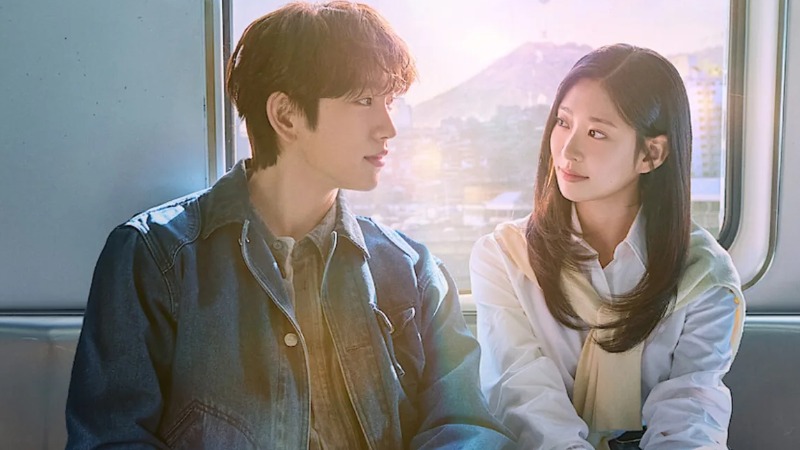
Still Shining is a 10-episode Korean drama that aired on JTBC from March 6 to April 3, 2026, and is available for global streaming on Netflix. Starring Park Jin-young (GOT7’s Jinyoung) and Kim Min-ju, the series tells the story of two people who fall in love as teenagers, are torn apart by life’s circumstances, and find each other again a decade later — only to discover that time does not always heal what it leaves behind.
The Story
Yeon Tae-seo and Mo Eun-ah meet and fall in love the summer before their senior year, but university commitments and shifting priorities force them apart. Ten years later, the two meet again in Seoul, and old feelings resurface. Both leads carry heavy burdens from the start. Tae-seo lost both parents in a car accident and assumed responsibility for his younger brother and grandparents, while Eun-ah’s father struggled with depression after being abandoned by his wife, leaving her with a deep fear of becoming a burden to anyone. These backstories are not handed to the viewer all at once — the drama reveals them slowly, through quiet conversations and careful silences, which is one of its greatest storytelling strengths.
Tone and Atmosphere
This is not a light or breezy romance. Still Shining is slow, raw, heavy, and bittersweet — but it is also full of hope and deep messages. Its purpose was never to show a classic love story. It feels like a quiet and comforting story about love, time, and growth. It does not try to be overly dramatic, but that is exactly what makes it special. The atmosphere, cinematography, and pacing create a nostalgic feeling that stays with you even after an episode ends. Viewers who go in expecting fast-paced romance or a tidy happy ending will likely find themselves frustrated. Those who are patient and pay close attention will find something far more layered and affecting.
Performances
Park Jin-young is the undeniable heart of this drama. Critics highlighted his emotional performance, calling it a standout quality of the series. The actors delivered close-to-perfect acting in every scene, with raw, unspoken moments. The show relied heavily on acting because many things were shown without being told. There is a lot of silence where emotions are transmitted only through gestures or glances — and the actors mastered it. Kim Min-ju brings a quiet warmth to Eun-ah, though some viewers felt her character became harder to read in the second half. Some critics noted that Mo Eun-ah’s motivations were difficult to follow at times, partly due to the script’s handling of her character’s decisions.
The Supporting Cast and Characters
The secondary characters each carry their own emotional weight. Tae-seo’s journey is ultimately about making peace with his past and accepting that his brother has grown capable of standing on his own. Eun-ah’s arc centers on letting go of guilt surrounding her father’s death and learning to stop repeating old patterns. Meanwhile, second lead Seong-chan is defined by an unhealthy obsession with Eun-ah — a character study in how love, when misdirected, becomes its own kind of trap.
Where It Struggles
The drama is not without its flaws. While the first few episodes are great and the leads have genuine chemistry, particularly in the high school scenes, the plot begins to stagnate as the series progresses. The vagueness that initially feels intentional eventually starts working against the story, making it confusing to follow what events from the past led the leads to where they are. The show raises a genuine question that is hard to shake: is it possible for two people to remain in love after going through consistent heartbreak again and again? For some, this ambiguity feels true to life. For others, it simply feels like stalling.
Ratings and Reception
The first episode recorded a 2.1% audience share in South Korea, which declined as the show continued, reaching 0.8% by the eighth episode — the lowest rating ever achieved by a Friday night series on JTBC. Despite the low domestic ratings, the drama found a more receptive audience internationally through Netflix, where its slow-burn style and emotional sincerity resonated with fans of quiet, character-driven romance.
Final Verdict
Still Shining is a drama that demands patience and rewards it unevenly. It is beautifully filmed, emotionally honest, and anchored by a genuinely impressive lead performance from Park Jin-young. But it is also a story that sometimes mistakes vagueness for depth, and stillness for meaning. It is not a typical romance and does not offer a conventional happy ending. Traumatic events leave lasting scars and change the course of people’s lives — and this drama takes that idea seriously, even when it tests the viewer’s willingness to stay. If you go in knowing what it is — a melancholy, introspective meditation on first love and the people we become without it — Still Shining has a quiet glow that is hard to forget.
