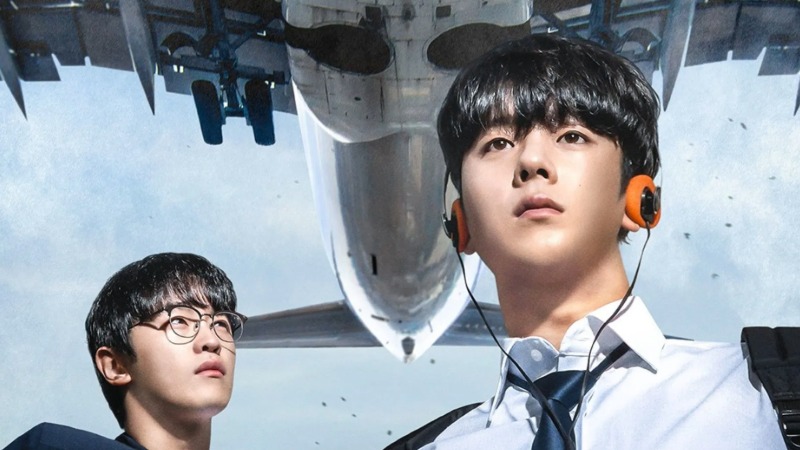
After the success of Weak Hero Class and Study Group, Korean streaming platforms are clearly hungry for more school action dramas. Enter One: High School Heroes—Wavve’s latest webtoon adaptation starring Lee Jung-ha (Moving) and Kim Do-wan in their first action drama roles. Based on Lee Eun-jae’s wildly popular webtoon that racked up 65 million views and won the 2020 Today’s Woori Manhwa Award, expectations were sky-high.
The premise is compelling: a model student suffering from domestic abuse and school bullying discovers he has a natural talent for fighting, and together with a strategic classmate, forms a masked vigilante group to take down bullies and protect victims. It’s Spider-Man meets Fight Club set in a Korean high school, with heavy doses of trauma and social commentary.
But here’s the frustrating truth about One: High School Heroes: it’s a tale of two halves. Episodes 1-4 deliver some of the most intense, gripping school action drama you’ll see all year. Then episodes 5-8 stumble so badly that you’ll wonder if the writers got replaced mid-season.
Let’s break down what makes this 8-episode series both thrilling and ultimately disappointing.
The Setup: Abuse, Pressure, and Breaking Points
Kim Eui-gyeom (Lee Jung-ha) is the definition of a model student—top of his class, dedicated to his studies, and seemingly perfect. But beneath that calm exterior lies a pressure cooker ready to explode. His father Kim Seok-tae (Kim Sang-ho) is abusive and controlling, standing over Eui-gyeom every night while he studies, poking him in the head when he gets answers wrong, and constantly demanding perfection.
Getting high scores isn’t enough for Seok-tae—Eui-gyeom must be number one. So when his son’s school becomes too competitive, dad forces a transfer to a lower-tier school where Eui-gyeom can more easily dominate the rankings. It’s a move that strips away any consideration for his son’s happiness, friendships, or mental health. Everything is sacrificed at the altar of academic achievement.
At his new school, Eui-gyeom encounters the typical bullying hierarchy. Hong-il and his gang target weaker students, and when Eui-gyeom doesn’t play by their social rules—wearing headphones to drown out his stress with his late brother’s Walkman—he becomes a target himself.
Enter Kang Yoon-gi (Kim Do-wan), a classmate who arrives late, reads situations with shrewd intelligence, and possesses decent fighting skills of his own. When Yoon-gi witnesses Eui-gyeom effortlessly handle multiple attackers in a bathroom confrontation, he recognizes something special: Eui-gyeom has a natural “fight IQ”—the ability to observe, learn, and adapt opponent’s techniques mid-battle.
Yoon-gi proposes a partnership: he’ll coach Eui-gyeom’s fighting skills while Eui-gyeom provides the raw talent. Together, they’ll become masked vigilantes who hunt down bullies and protect victims, calling themselves the “High School Heroes.”
It’s a premise loaded with potential—and for four glorious episodes, the show absolutely delivers.
Episodes 1-4: Peak Korean School Action
Multiple viewers on MyDramaList and other platforms agree: the first four episodes of One: High School Heroes are hands-down the best part of the series. Here’s why they work so well:
The Fight Choreography Feels Real and Brutal
Unlike some school action dramas that make teenage fights look like choreographed dance numbers, One: High School Heroes grounds its violence in reality. Punches hurt. People get tired. Injuries accumulate. The fight scenes have real weight and intensity that makes every confrontation feel dangerous and consequential.
Eui-gyeom’s ability to learn and copy fighting techniques during battle adds tactical depth to each fight. He’s not just brawling—he’s evolving as a fighter in real-time, which makes watching him work genuinely exciting.
Lee Jung-ha’s Emotional Performance
This is Lee Jung-ha’s first real action drama following his appearance in Moving, and he absolutely delivers. His portrayal of Eui-gyeom’s internal struggle—the model student facade cracking to reveal rage, trauma, and desperation—is nuanced and powerful.
You see Eui-gyeom using fighting as an outlet for his pent-up anger from years of abuse. Every punch he throws carries the weight of his father’s cruelty, his mother’s silent complicity, and his brother’s tragic fate. Fighting isn’t heroic for him—it’s survival and release.
The headphones with his dead brother’s cassette player serve as a brilliant visual metaphor. They’re his sanctuary, his way of drowning out the oppression, and the one connection to someone who understood him. When he takes them off to fight, it’s like watching a dam break.
The Dynamic Between Eui-gyeom and Yoon-gi
The partnership between our two leads crackles with tension and chemistry. Yoon-gi acts as strategist and coach, but there are hints from the beginning that his motives aren’t entirely altruistic. Is he genuinely trying to help Eui-gyeom and protect students, or is he using Eui-gyeom’s fighting talent for his own purposes?
This ambiguity adds layers to their relationship. You want to trust Yoon-gi—he’s charismatic, smart, and seems to care—but something feels slightly off. That tension keeps you invested in every interaction.
Meaningful Stakes and Purposeful Violence
Every fight in the first four episodes happens for a reason. Eui-gyeom isn’t just randomly fighting—he’s protecting specific victims, confronting specific bullies, and building the “High School Heroes” reputation. The violence feels purposeful and connected to the larger themes about standing up to oppression and breaking cycles of abuse.
The masked vigilante angle adds thriller elements to the school setting. Watching Eui-gyeom and Yoon-gi plan their moves, stalk bullies, and execute their brand of justice creates genuine suspense.
The Domestic Violence Hits Hard
The show doesn’t pull punches (pun intended) when depicting the abuse Eui-gyeom suffers at home. His father’s psychological and physical torment is portrayed unflinchingly, making it clear why Eui-gyeom feels trapped and powerless. The scenes of abuse are difficult to watch, but they’re essential to understanding his character and his desperate need to reclaim control through fighting.
This isn’t background trauma—it’s the engine driving the entire story.
Episodes 5-6: Where Did the Magic Go?
And then something happens around episode 5. The tight focus that made the first half so compelling starts to unravel. Multiple viewers noted this exact turning point—episodes 5 and 6 feel like they belong to a different, less interesting show.
Loss of Purpose and Direction
The clear mission of the “High School Heroes”—protecting victims and fighting bullies—becomes muddled. Suddenly there are new characters, convoluted plotlines, and the show loses sight of what made it work. The fights no longer feel as meaningful or connected to the core themes.
One MyDramaList reviewer bluntly stated they might just pretend episodes 5 and 6 never happened. That’s how jarring the quality drop is.
The Mental Health Subplot Takes Over
Instead of maintaining balance between action and character development, the show pivots heavily toward Eui-gyeom’s mental health struggles. While this could have been powerful, it’s handled clumsily. One reviewer noted that instead of a school being a battleground for bullies and heroes, it becomes a survival ground for a high school student battling mental health issues.
The problem isn’t addressing mental health—it’s that the show abandons its action-thriller identity to become something it wasn’t built to be, and the transition is awkward and unsatisfying.
Repetitive and Aimless Fighting
Fights that previously had clear stakes and purpose start feeling repetitive. Eui-gyeom fights, wins, fights again, and you start wondering what the endgame is. The dramatic tension that propelled the first half dissipates, leaving behind empty action sequences that don’t advance character or plot.
Episode 7: A Return to Form (Sort Of)
Episode 7 brings backstory that helps explain character motivations and adds depth to the narrative. Multiple reviewers noted that this episode was solid, providing context that should have been woven in earlier. Learning more about the characters’ pasts and the events that shaped them adds weight back to the story.
But by this point, the damage from episodes 5-6 has already deflated momentum. It’s like the show realized it had lost its way and tried to course-correct, but couldn’t fully recover.
Episode 8: A Passable But Unsatisfying Conclusion
The finale is described by most viewers as “passable”—not terrible, but not great either. It wraps up the main storylines but leaves many questions unanswered and some plot threads dangling conspicuously.
Some reviewers speculated this might be setting up for Season 2, which would explain the incomplete feeling. But as a standalone 8-episode series, the ending feels rushed and doesn’t provide the cathartic payoff that the strong opening promised.
The final confrontations lack the emotional punch of earlier episodes. Characters make decisions that feel dictated by plot necessity rather than organic development. And the resolution to Eui-gyeom’s home situation—arguably the most important storyline—feels underdeveloped.
How Does It Compare to Weak Hero Class and Study Group?
This is the question everyone wants answered. If you loved Weak Hero Class or Study Group, should you watch One: High School Heroes?
The short answer: It’s not quite as good as Weak Hero Class 2 at its best, but has higher highs than Study Group.
The detailed comparison:
vs. Weak Hero Class
Weak Hero maintains more consistent quality throughout its run. While One: High School Heroes has more intense fight choreography in its peak episodes, Weak Hero delivers better character development and more satisfying narrative arcs. Weak Hero also does a better job balancing action with emotional depth throughout the entire series, not just the first half.
vs. Study Group
One: High School Heroes is significantly better than Study Group in terms of fight choreography, acting performances, and thematic depth. Episodes 1-4 of One are more engaging than anything Study Group offered. However, both series suffer from inconsistent second halves that undermine their strong starts.
The Unique Selling Point
What sets One: High School Heroes apart is its focus on domestic violence and the psychological toll of parental abuse. While other school action dramas focus primarily on peer-to-peer bullying, One explores how home trauma drives Eui-gyeom’s behavior and choices. This added layer could have made it the deepest entry in the genre—if only the execution had remained consistent.
Lee Jung-ha and Kim Do-wan: Action Stars in the Making
Despite the show’s narrative stumbles, both lead actors prove they can handle action roles with aplomb.
Lee Jung-ha brings the physicality and emotional depth required for Eui-gyeom. Following his supernatural role in Moving, this demonstrates his range. He sells both the quiet suffering of an abuse victim and the explosive violence of someone pushed past their breaking point. His fight scenes are convincing, and his emotional beats land even when the script doesn’t fully support them.
Kim Do-wan makes an impressive action debut as Yoon-gi. He handles the more cerebral aspects of the character—the strategizing, the manipulation, the ambiguous morality—with skill. His fighting looks practiced and realistic, and he brings charisma to a role that could have been one-dimensional.
Both actors elevate material that becomes weaker as the series progresses. They deserve credit for keeping viewers engaged even when the writing falters.
The Supporting Cast and Production Values
Kim Sang-ho as the abusive father delivers a chillingly believable performance. He makes Seok-tae despicable without turning him into a cartoon villain. You understand he believes he’s acting in his son’s best interest, which makes his cruelty even more disturbing.
Kim Joo-ryung as Eui-gyeom’s mother brings quiet tragedy to her limited screentime. Her complicity in the abuse—born from her own fear and powerlessness—adds another layer to the family dysfunction.
The production values are solid throughout. Director Lee Sung-tae brings visual flair to the fight scenes, using creative angles and lighting to enhance the action. The school setting feels authentic, and the masked vigilante sequences have a satisfying Batman-esque quality.
The soundtrack effectively underscores emotional moments without overwhelming them, though it doesn’t include any particularly memorable tracks.
The Webtoon Adaptation Question
For those familiar with Lee Eun-jae’s original webtoon, opinions are mixed on how faithfully the drama adapts the source material. Some purists feel the drama made unnecessary changes and condensed too much into 8 episodes. Others appreciate the live-action’s attempt to add nuance to certain characters and relationships.
The webtoon’s 65 million views and award recognition suggest there’s a strong story at its core. Whether the drama fully captures what made the webtoon so beloved is debatable, but it’s clear that something got lost in translation—particularly in the second half.
Content Warnings: This Gets Dark
Before you start One: High School Heroes, be aware it deals with heavy content:
- Graphic domestic violence (physical and psychological parental abuse)
- Intense school bullying (physical violence, humiliation, intimidation)
- Mental health crises (trauma, depression, emotional breakdown)
- Violence and blood (realistic fight scenes with injuries)
- Themes of suicide and self-harm (discussed and implied)
This is not a light watch. If you’re sensitive to depictions of child abuse or intense violence, this drama will be challenging. The domestic violence scenes in particular are difficult and unflinching.
The Frustrating Potential
What makes One: High School Heroes so disappointing isn’t that it’s bad—it’s that it shows you how great it could have been, then fails to maintain that standard.
Episodes 1-4 demonstrate that this team could have created one of the best school action dramas ever made. The acting, action choreography, emotional depth, and thematic weight are all there. If the entire series had maintained that quality, we’d be talking about this as a must-watch alongside Weak Hero Class.
Instead, we’re left with a frustratingly uneven series that starts strong and stumbles to an underwhelming finish. One reviewer captured this perfectly: “If they had kept the intensity of those first four episodes, this could’ve been a truly great drama!”
The Verdict: Watch the First Half, Lower Your Expectations for the Rest
Should you watch One: High School Heroes? Yes—with adjusted expectations.
Go in knowing that you’re going to get four episodes of excellent school action drama followed by four episodes that range from mediocre to passable. If you can accept that trade-off, there’s enough good here to justify your time.
The first half alone demonstrates what Korean school action dramas can achieve when they commit to brutal realism, strong performances, and meaningful stakes. Lee Jung-ha and Kim Do-wan prove they’re action stars worth watching in future projects. And the core themes about abuse, trauma, and reclaiming agency deserve attention even if the execution becomes flawed.
Just don’t expect the landing to match the takeoff.
What works: Episodes 1-4 are peak school action drama, Lee Jung-ha’s star-making performance, intense fight choreography, unflinching portrayal of domestic abuse, strong first half
What doesn’t work: Quality drops significantly in episodes 5-6, unsatisfying ending, loss of narrative focus, mental health subplot handled clumsily, doesn’t stick the landing
Watch One: High School Heroes if you:
- Loved Weak Hero Class and want more school action content
- Want to see Lee Jung-ha in an action role
- Can forgive uneven second halves if the first half is strong
- Are interested in stories about abuse survivors reclaiming power
- Don’t mind darker, heavier K-dramas with violence
Skip it if you:
- Need consistent quality throughout a series
- Are sensitive to graphic domestic violence
- Get frustrated by shows that don’t stick the landing
- Prefer lighter, more optimistic school dramas
- Want fully developed storylines with satisfying conclusions
One: High School Heroes aired on Wavve from May 30 to June 13, 2025. All 8 episodes (approximately 45 minutes each) are available for streaming. The series earned an 8.2 rating on MyDramaList from over 7,600 users.
Bottom line: A promising start that couldn’t maintain its momentum. Watch for the first four episodes—they’re genuinely excellent. Just prepare yourself for a disappointing slide from there.
