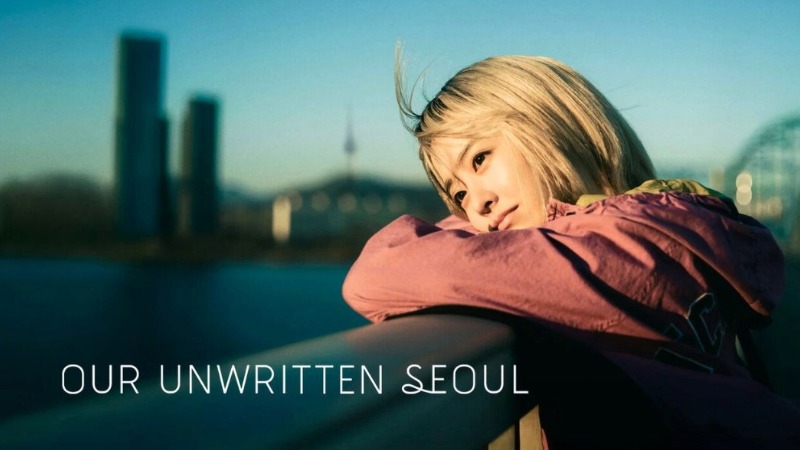
Sometimes the most profound dramas aren’t about grand revenge plots, star-crossed lovers, or chaebols with dark secrets. Sometimes they’re about two sisters trying to figure out how to keep living when life hasn’t gone according to plan.
Our Unwritten Seoul is that rare K-drama gem that doesn’t rely on makjang melodrama, convoluted plot twists, or endless misunderstandings. Instead, it offers something infinitely more valuable: genuine comfort. Like a warm hug from someone who understands what it feels like to be lost, exhausted, and uncertain whether you’ll ever find your way again, this drama became one of 2025’s most healing viewing experiences.
With a 7.9 rating on IMDb, global Netflix Top 10 success in over 28 countries, and viewership that grew from 3.6% to 8.4% by its finale, Our Unwritten Seoul proved that audiences were hungry for stories that prioritize emotional honesty over shock value. This is a drama about identity, sisterhood, healing, and the courage it takes to start over—themes that resonate universally despite the Korean setting.
And at the center of it all is Park Bo-young, delivering what many are calling the performance of 2025—playing not two characters, but four versions of twin sisters who swap lives and discover themselves in the process.
The Premise: When Your Twin Lives the Life You Wanted
Yoo Mi-rae and Yoo Mi-ji are identical twins whose similarities end with their looks. Their names themselves carry the weight of their divergent paths: Mi-rae means “future,” while Mi-ji means “unknown.”
Mi-rae (the older twin by minutes) has lived her life according to everyone’s expectations. Model student, perfect employee at a prestigious public corporation in Seoul, the daughter who made all the right choices. But beneath that polished exterior, she’s drowning—suffering workplace bullying from her boss, crushed by perfectionism, and so exhausted she can barely breathe.
Mi-ji (the younger twin) took a different path. Once a promising sprinter with Olympic dreams, a career-ending injury derailed everything. She returned to their hometown of Duson-ri to care for their ailing grandmother, working various part-time jobs without any clear future. To the outside world, she looks like the twin who gave up. To herself, she’s just surviving.
When Mi-ji discovers the extent of her sister’s suffering, she makes an audacious proposal: they swap places. Mi-ji will go to Seoul and handle Mi-rae’s job and life, giving her sister space to breathe and heal. Mi-rae will stay in the countryside, caring for grandmother and rediscovering who she is beyond productivity and achievement.
What begins as a temporary switch becomes a journey of profound self-discovery for both sisters—and for everyone around them who thought they knew who these women were.
Park Bo-young: Four Characters, One Phenomenal Performance
Let’s address this immediately: Park Bo-young is extraordinary.
She doesn’t just play twins Mi-ji and Mi-rae—she plays four distinct versions: each sister as herself, and each sister impersonating the other. And every single version is completely believable.
Park Bo-young does not merely carry the series—she shapes it. Through subtle distinctions of expression, quiet shifts in tone and posture, and evolving body language, she creates four substantial characters. You can tell within seconds which twin you’re watching and whether they’re being themselves or pretending to be their sister.
As Mi-ji (being herself): Free-spirited, physically confident, direct in communication, quick to laugh As Mi-ji (pretending to be Mi-rae): Stiff posture, careful speech, overthinking every movement, visibly uncomfortable As Mi-rae (being herself): Controlled, anxious energy barely contained, precise movements, people-pleasing As Mi-rae (pretending to be Mi-ji): Attempting casualness that feels forced, overcompensating, gradually relaxing
The transformation is miraculous. Multiple viewers noted they could close their eyes and know which character was speaking just from voice inflection. Others said it truly felt like watching two different actors.
One viewer captured it perfectly: “Park Bo Young’s acting is outstanding in portraying the twin characters. You can really see that she’s able to bring out two totally different personalities, making it seem like two different actors are playing the roles.”
This isn’t just technical skill—it’s deeply empathetic character work that makes you fall in love with both sisters despite their flaws.
The Supporting Cast: Every Character Feels Real
Park Jin-young as Lee Ho-su
GOT7’s Jinyoung plays Ho-su, a man marked by visible and invisible scars. Partially deaf due to a childhood accident, working in a cafeteria despite his college education, estranged from his wealthy mother who never accepted his disability—he’s the embodiment of imperfection in a society obsessed with achievement.
Lee Ho-su is not the typical love interest. His relationships with his mentor, mother, past, and with both Mi-rae and Mi-ji are told without pathos. The cafeteria jobs, the small-town life, the broken dreams—these make Our Unwritten Seoul a counterpoint to dramas suffocated by glamour.
Jinyoung brings remarkable depth to what could have been a one-dimensional “understanding boyfriend” role. His performance is subtle, kind without being a pushover, damaged without being broken. The chemistry with Park Bo-young is genuine and warm—you believe both sisters would fall for him for different reasons.
Episode 11’s scene between Ho-su and his mother had viewers in tears, with many praising Jinyoung for outdoing himself emotionally.
Ryu Kyung-soo as Se-jin
Mi-rae’s workplace nemesis-turned-friend Se-jin provides one of the drama’s sweetest subplots. Ryu brings adorable energy to a character who could have been a simple love interest but instead becomes a genuinely interesting person with his own growth arc.
Multiple viewers cited the Mi-rae/Se-jin relationship as their favorite part, praising the sweet and innocent chemistry that develops organically rather than through forced romantic tension.
The Mothers and Grandmother
The veteran actresses playing the twins’ mothers (Won Mi-kyung and Jang Young-nam) and grandmother (Kim Sun-young) deliver performances that are frustrating, relatable, and ultimately heartbreaking. These aren’t one-dimensional “difficult mothers”—they’re complex women carrying their own trauma and making choices they believe are protective even when they’re harmful.
The grandmother’s relationship with Mi-ji is particularly precious and became a viewer favorite. And Rosa (the grandmother’s friend played by Lim Cheol-soo) provided unexpected emotional depth with her storyline about found family.
What Makes It Special: Healing Over Drama
It Resolves Misunderstandings Like Adults
Finally, a Korean drama that resolves misunderstandings in a mature manner without the issue being dragged out interminably. Characters actually communicate. When problems arise, people sit down and talk through them like functioning adults rather than suffering in silence for eight episodes.
This might seem basic, but it’s revolutionary for K-drama. The lack of manufactured conflict through poor communication is so refreshing that multiple viewers specifically highlighted it as a reason they loved the show.
It’s About Real Struggles
The twins’ struggles aren’t manufactured for drama—they’re painfully real:
- Workplace bullying and the powerlessness of speaking up
- The pressure of being the “successful” child
- Caring for aging relatives while your own dreams die
- Comparing yourself to others on different timelines
- The weight of family expectations
- Learning to live with disability in an ableist society
- Starting over when you feel too old to begin again
These aren’t plot points—they’re lived experiences that make the drama feel deeply personal to anyone who’s ever felt behind in life, trapped in expectations, or unsure how to move forward.
The Cinematography Captures Seoul Like a Dream
The production took part in Seoul’s promotional campaign “Seoul, My Soul,” and the city becomes a character itself. From Banpo Bridge’s rainbow fountains to Dongdaemun Design Plaza to quiet hanok districts, Seoul is captured with dreamlike beauty that makes you fall in love with the city.
The countryside scenes in Mungyeong and Damyang provide beautiful contrast—slower paced, earth-toned, grounding. The visual language itself tells the story of two different worlds and what each offers the twins.
The OST is Perfection
Music director Nam Hye-seung (who also worked on Our Beloved Summer) crafted a soundtrack featuring Choi Yu-ree, 10cm, Hong Isaac, dori, and Elaine that perfectly captures the drama’s emotional landscape. Multiple viewers gave the music a perfect 10/10 rating.
The songs enhance without overwhelming, appearing at exactly the right emotional moments to amplify what’s already there rather than telling you how to feel.
The Themes: It’s Okay to Not Be Okay (and to Start Over)
At its heart, Our Unwritten Seoul explores several interconnected themes:
Identity: Who are you when you’re not performing the role everyone expects?
Timing: It’s never too late to begin again, no matter how many blank pages you face.
Sisterhood: The complex bond between siblings who love each other but don’t always understand each other.
Healing: Recovery isn’t linear, and sometimes you need to step away from your life to find yourself again.
Imperfection: Anything you do to survive is brave, no matter how pathetic or messy it looks.
One viewer beautifully summarized the message: “This drama healed me in ways I never thought I needed. It taught me that it’s okay to start over, to be lost, to feel deeply, and to not know what to do because in the end, we are just human beings.”
The final inner monologue was described as “beautiful and uplifting,” reminding viewers that no matter how many blank pages we face, we should not be afraid to begin again.
What Doesn’t Work: Minor Flaws in a Beautiful Package
Some Plot Points Feel Familiar
The twin-swap premise isn’t new, and viewers familiar with the trope will recognize certain beats. The drama doesn’t reinvent the wheel—it just executes familiar elements with exceptional warmth and sincerity.
Runtime Could Be Tighter
At 12 episodes of 80 minutes each, some viewers felt the pacing dragged slightly in the middle episodes. A few subplots could have been trimmed, and the runtime occasionally feels stretchy even with strong character work.
The Ending Divided Viewers
While most loved the finale, some felt it would have been better without Episode 12, suggesting the story reached its natural conclusion in Episode 11. Others found the ending satisfying and complete.
There’s also a minor noble idiocy moment in Episode 11 that frustrated viewers, though it’s resolved relatively quickly compared to typical K-drama standards.
The “Overrated” Debate
With such overwhelming praise, some viewers entered with sky-high expectations and came away feeling the drama was good but not the masterpiece others claimed. These viewers gave it solid 7-8/10 ratings while acknowledging it’s overrated in their opinion.
The truth is probably that Our Unwritten Seoul speaks deeply to certain viewers (especially those struggling with similar life pressures) while feeling pleasant but not revelatory to others.
The Phenomenon: Episode 1 as One of the Best Ever Made
An unusual number of viewers called Episode 1 “one of the best first episodes of a K-drama I’ve ever watched.” The consensus was that the premiere was so perfectly paced, emotionally rich, and engaging that it hooked viewers instantly.
One viewer compared it to Flower of Evil‘s gripping opening, saying nothing else had grabbed them so completely from minute one. The episode establishes both twins, their relationships, their struggles, and the stakes with remarkable efficiency while never feeling rushed.
If you’re unsure whether to commit to the full drama, watch Episode 1. If it doesn’t hook you, the show probably isn’t for you. But for most viewers, that first episode was enough to guarantee they’d see it through to the end.
Who Should Watch Our Unwritten Seoul?
Watch Our Unwritten Seoul if you:
- Need comfort and healing more than plot twists
- Appreciate character-driven slice-of-life dramas
- Love stories about sisterhood and family
- Are struggling with feeling “behind” in life
- Want mature communication instead of manufactured conflict
- Appreciate phenomenal acting (Park Bo-young fans, this is essential viewing)
- Enjoy dramas that make you cry happy tears
- Love Seoul and want to see it beautifully filmed
- Need a reminder that it’s okay to start over
Skip it if you:
- Need fast-paced plots with constant action
- Want romance to be the primary focus (it’s important but not central)
- Get bored by slice-of-life and healing dramas
- Prefer makjang and intense melodrama
- Don’t enjoy slower, contemplative pacing
- Aren’t interested in family dynamics and personal growth
The Verdict: A Rare Gem That Deserves Its Love
Our Unwritten Seoul is one of those dramas whose true beauty unfolds gradually—like the secret bloom of an evening primrose, opening quietly under the cover of dusk, revealing its radiance only to those who wait with patience.
It’s not flashy. It’s not addictive in the binge-watch sense. It won’t keep you up at night wondering what happens next. What it will do is hold your hand, sit with you in your struggles, and remind you that feeling lost doesn’t mean you’re failing—it means you’re human.
Park Bo-young delivers a transcendent performance that alone justifies watching. Park Jin-young and Ryu Kyung-soo provide beautiful support. The writing respects your intelligence and emotional capacity. The direction captures Seoul and the countryside with equal love. The music wraps around you like a familiar blanket.
Most importantly, it treats its themes with genuine care. This is a drama written for people who look fine on the outside but are already wavering and exhausted inside—and it speaks directly to that exhaustion with compassion rather than judgment.
Is it perfect? No. Could it be tighter? Yes. Will everyone love it as much as its biggest fans? Probably not.
But for those it resonates with—and based on its global success, that’s a lot of people—Our Unwritten Seoul will be the drama they recommend for years to come. The one they rewatch when life feels overwhelming. The one they suggest to friends who need to hear that it’s okay to not have everything figured out.
In a year filled with high-concept dramas and big-budget spectacles, Our Unwritten Seoul reminds us that sometimes the most powerful stories are the simplest ones: two sisters learning to live authentically, to forgive themselves and each other, and to write their own futures one page at a time.
What works: Park Bo-young’s phenomenal four-character performance, mature handling of conflict, genuine emotional depth, beautiful cinematography of Seoul, perfect OST, healing themes that resonate deeply, strong supporting cast
What doesn’t work: Familiar premise, occasionally slow pacing in middle episodes, divided opinions on finale, some might find it overhyped
Bottom line: A warm, healing embrace of a drama that reminds us it’s never too late to begin again. Park Bo-young’s career-best work anchors a story that prioritizes emotional truth over plot machinations. Not perfect, but profoundly comforting—exactly what 2025 needed.

I really appreciate this review. It’s fantastic to see a drama focusing on personal growth and finding happiness, rather than just complicated relationships.